
Propagating dianthus, a flowering plant of approximately 300 species, is not difficult. The species can be annual, biennial, or perennial. The dianthus is also a breeze to grow. Irrigate when dry – about once or twice a week, and fertilize once monthly. Cut the stems down to ground level when the blooms are spent. Pests and diseases are infrequent and may be treated organically
Propagating from Seed
Dianthus is partial to a cool climate and full sun. The Carnation, Sweet Williams, and Pink prefer rich soil. Most of the species, however, like alkaline soil. For the Alpine variety, add lime to acidic soil. If you want dianthus for outdoor gardening, plant them in the spring after the soil has warmed.
Sowing Seeds Directly Into the Garden
Find a sunny location for your garden. You need light, well-drained soil. In spring or early summer, sow the seeds directly into the prepared garden at 1/8th of an inch depth. Using your hand, firm the soil over the seed. Keep the ground moist until the dianthus plants have sprouted and started growing. Dianthus plants propagated in this manner may not flower until the next season.
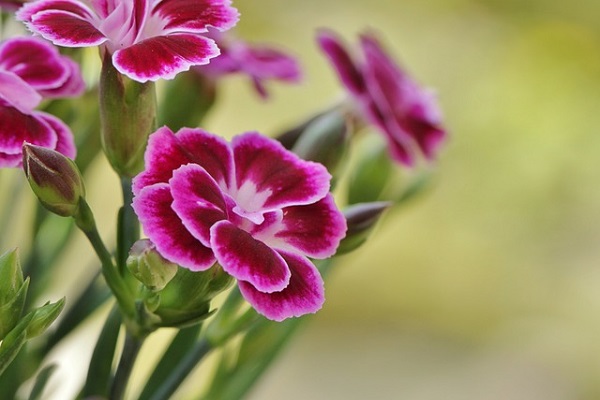
Dianthus
Collecting and Storing Seeds
Fresh seeds have the best germination rates. To store them for later use, follow the following steps:
- Select some healthy blooms, tie them with a colorful string for a marker, and let the blooms wither and die on the plant.
- When the marked blooms are spent, hold one bloom at a time over a brown paper sack and gently roll it to free the small, round black seeds. You will need a different bag for each color. Do not forget to label the sacks. Find a dry, warm place, out of draft, for the paper sacks. Shake the bag each day until the seeds are totally dry.
- Lay the dry seeds, by color, on a flat surface. Pick out any debris like leaves, petals, etc. Place the dried seeds, by color, in a labeled white envelope. Store the envelopes in a cool, dry location until spring.
Starting Seeds Indoors to Planting
In early February, sow the seeds in trays with soil mix meant for seeds. Lightly cover with vermiculite or sand, and place in a warm location. Do not grow in the shade. The seeds need good light to grow healthy seedlings. Keep moist throughout. Germination time is approximately five days. Move to a cool, sunny location when the seeds have sprouted. Keep moist. When the second set of leaves (true leaves) appear, transplant the seedlings to a more commodious tray. Loosen the soil before attempting to remove the plants. Be extra careful as the seedlings are very delicate at this stage. To avoid air pockets when planting the seedlings, firm the soil with your hand. Wait until the seedlings are about two to three inches tall before transplanting in their individual containers.

I bought 2 dianthus at Wal-Mart and they looked pretty healthy but when I planted them in the ground they look like they are going to die. They are turning brown. I watered them well and we have had rain also. Any ideas?